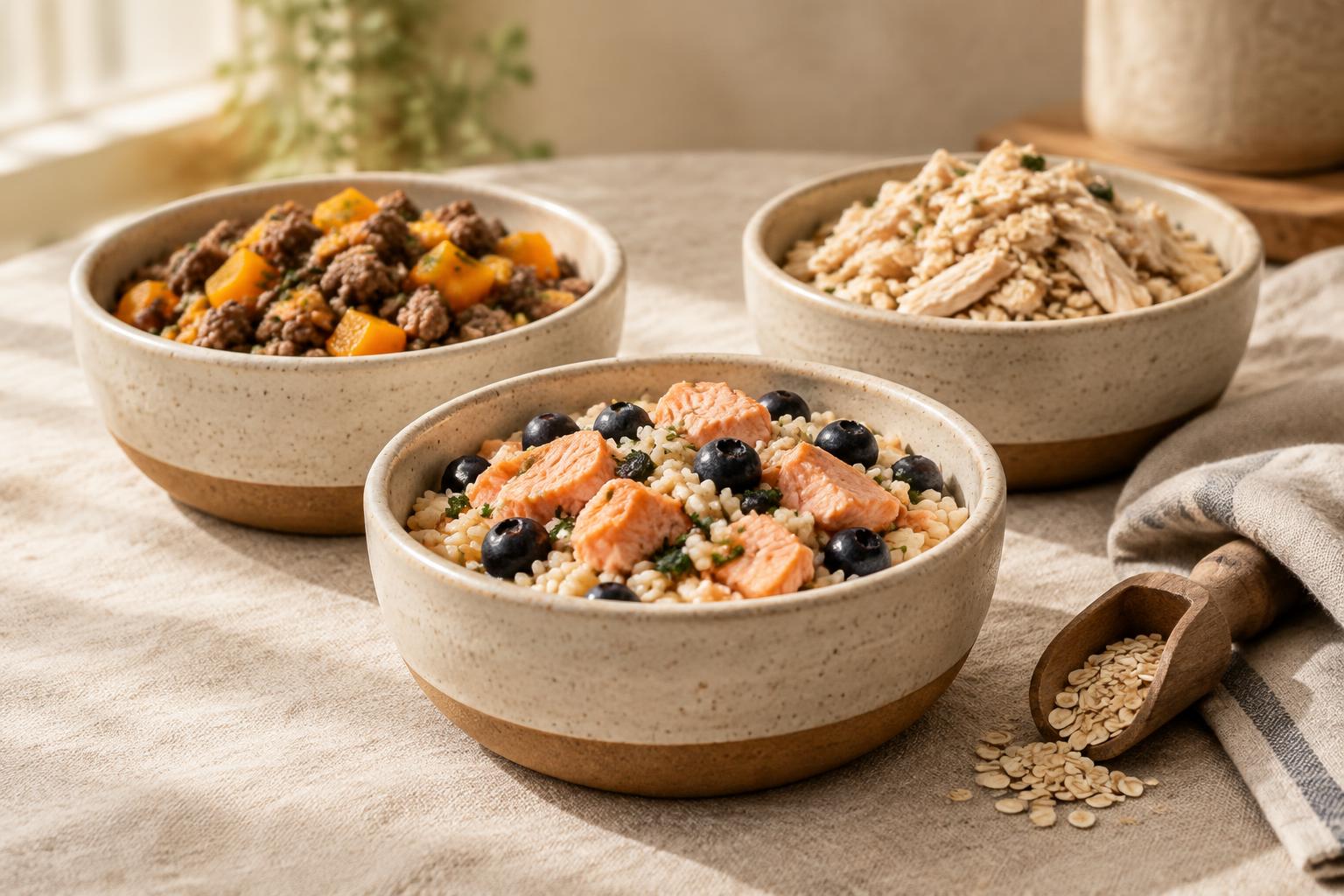
Fresh food carries a lot more water than dry food, so the same weight is not the same meal. A portion that looks small next to a bowl of kibble can be a full dinner when it is fresh, and a portion that looks generous can be light. Weigh it the first few times rather than eyeballing it.
We start from your dog's body weight, age and how much they move — then we watch. Over two or three weeks, body condition tells you more than any chart: ribs you can feel easily under the coat, a waist you can see from above, energy steady through the day. If dinner is being inhaled and weight is drifting down, the portion goes up. If your dog has slowed down and thickened around the middle, it comes back a little.
Treats and toppers count toward the day. A bark bar, a spoon of pup cream, a couple of gummies — that is real food, not a free extra, and it belongs in the total.
Change slowly. Over about a week, mix the new food into what your dog already eats, a little more each day. Faster than that and you will not know whether an unsettled stomach is the new food or the speed of the switch.
If your dog has a medical condition, or your vet has them on a specific diet, have the plan confirmed by your vet before you start.
These notes are general guidance for healthy dogs and are not veterinary advice. If your dog has a diagnosed condition, is pregnant, or is on medication, talk to your vet before changing what they eat.