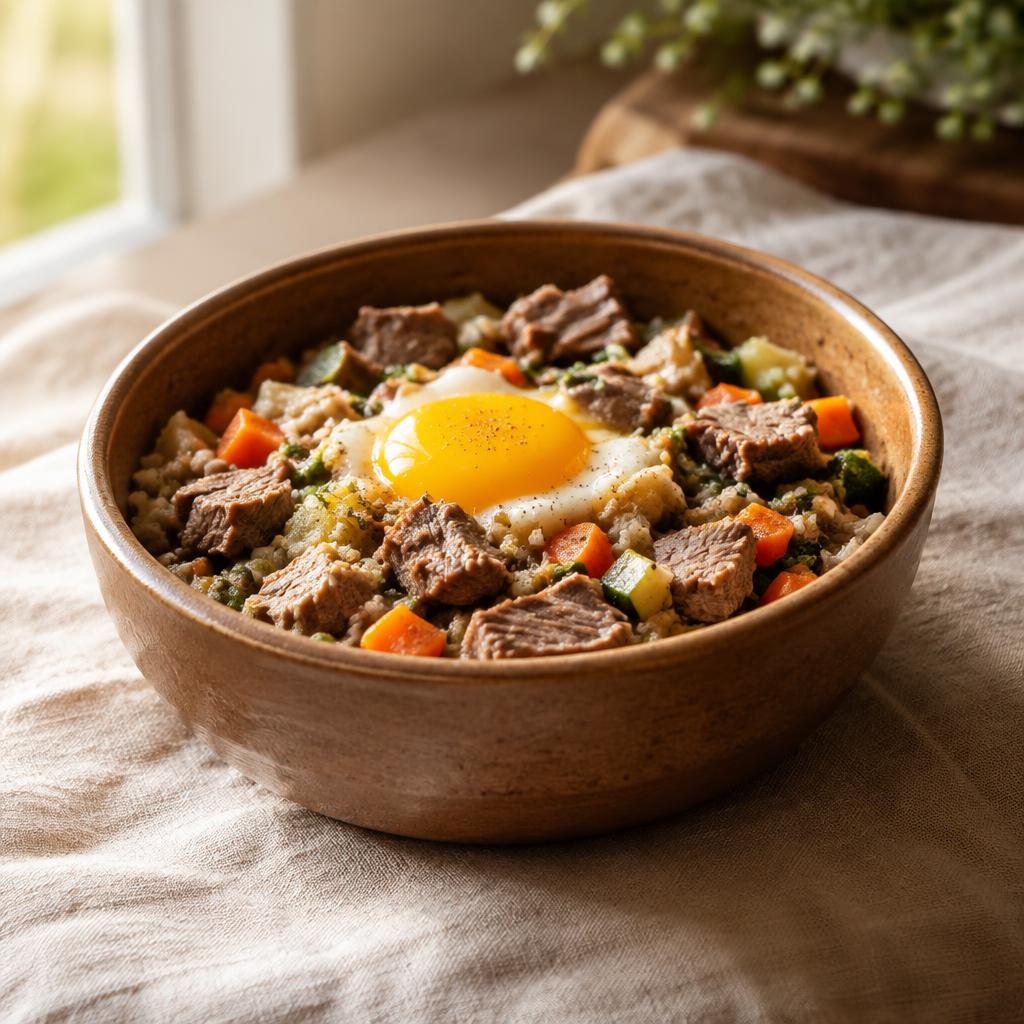
If you read the list on our Sunday Bowl out loud, it takes about eight seconds: ground meat, sweet potato, carrot, zucchini, cooked egg, bone broth, a little parsley. There is no long tail of thickeners, colours and things with numbers in their names — not because we are clever, but because the recipe is short.
A short list does one very practical thing: it lets you tell what is doing what. When a dog is itchy, or loose, or simply not keen on dinner, a short list narrows the question to a handful of suspects instead of forty. You can take out the egg, or swap beef for turkey, and see how things look in a couple of weeks. Changing one thing at a time is only possible when there is room in the recipe to move, and adjusting a portion or a protein stays simple instead of becoming a rebuild.
Worth saying plainly: the words "natural" and "premium" on a bag tell you almost nothing. They cost a printer nothing and they are not a description of what is inside. A list you can read out loud, in ordinary words, is worth more than either of them — and a shorter list is a list you can actually check.
One caution, always: if your dog has a diagnosed condition, or is on a prescribed diet, have any change to their food confirmed with your vet before you make it.
These notes are general guidance for healthy dogs and are not veterinary advice. If your dog has a diagnosed condition, is pregnant, or is on medication, talk to your vet before changing what they eat.